


Quick Answer
A complete poolside backyard starts with a thoughtful plan. Evaluate your outdoor space first, then design around shade, gathering areas, outdoor cooking, landscaping, and future additions. By creating a cohesive layout that fits San Antonio's climate and your long-term goals, you can transform your pool into the centerpiece of an outdoor living space your family will enjoy for years.
Key Takeaways
- Assess your backyard's sun exposure, drainage, and layout before choosing any poolside features.
- A patio cover or pergola provides the shade needed to make your outdoor space comfortable throughout the year.
- Design your outdoor kitchen, seating areas, and pathways so they work together and support natural traffic flow.
- Landscaping, lighting, and durable materials help create a beautiful, low-maintenance backyard.
- Plan your project in phases if needed, but start with a master plan that allows for future additions.
- A free consultation can help you choose the right features, materials, and layout for your property.
Your pool may be the centerpiece of your backyard, but it doesn't automatically create an outdoor space you'll use every day. Without shade, comfortable seating, a place to cook, and protection from the occasional San Antonio storm, many homeowners find themselves spending less time outside than they expected.
Great backyard pool ideas for San Antonio homes go beyond the pool itself; They’re focused on an outdoor living space family and friends can enjoy year-round.
This guide walks you through every stage of the planning process, from assessing your property and choosing the right shade structure to designing an outdoor kitchen, planning your layout, selecting landscaping, and preparing for future additions. Whether you're starting with a brand-new pool or upgrading an existing backyard, you'll have a clearer roadmap for building a space that fits your lifestyle.
How Should You Assess Your Outdoor Space Before Building Around a Pool?
The best backyard pool ideas that San Antonio homeowners choose begin with careful planning. Before adding a patio cover, pergola, or outdoor kitchen, evaluate your yard's sun exposure, traffic flow, drainage, utility access, and available space for future additions. A thoughtful plan helps every feature work together and reduces the likelihood of costly changes later.
Evaluate Sun Exposure and Shade
Start by watching how the sun moves across your yard throughout the day. South-facing pool areas often need more shade than homeowners expect, especially during the hottest months of the year. Identifying the sunniest areas will help you determine where a patio cover or pergola will provide the greatest benefit.
Think About Traffic Flow
Consider how people will move through the space with convenience. The path from your back door to the pool, seating area, and outdoor kitchen should feel natural and unobstructed. A well-planned layout makes it easier for family and guests to move around without crossing cooking or dining areas.
Plan for Utilities and Drainage
Take note of your pool equipment, utility connections, and drainage patterns before adding permanent structures. Leaving enough room for maintenance access and correcting drainage issues early can prevent costly changes later. Heavy rain can quickly expose low spots around a pool deck, so it's best to address grading before construction begins.
Leave Room for Future Additions
Many homeowners in the San Antonio area complete their outdoor living space in phases. You might start with a patio cover, then add an outdoor kitchen, screen enclosure, or additional seating area later. Planning for future improvements from the beginning helps every addition fit seamlessly into the overall design process.
Once you understand how your backyard functions, you can start choosing the features that will make it more comfortable and enjoyable. For most San Antonio homeowners, that begins with adding shade.
What's the Best Way to Add Shade to a Poolside Patio?
Most poolside backyards need either a patio cover or a pergola, and the right choice depends on how much protection you want versus how open you want the space to feel. Shade isn't an upgrade you can skip and add later without consequence. It's the foundation everything else depends on. South-central Texas sun is intense from April through October, and without cover, poolside furniture fades, decking gets too hot to walk on barefoot, and pool time shrinks to early morning and evening only.
Patio covers

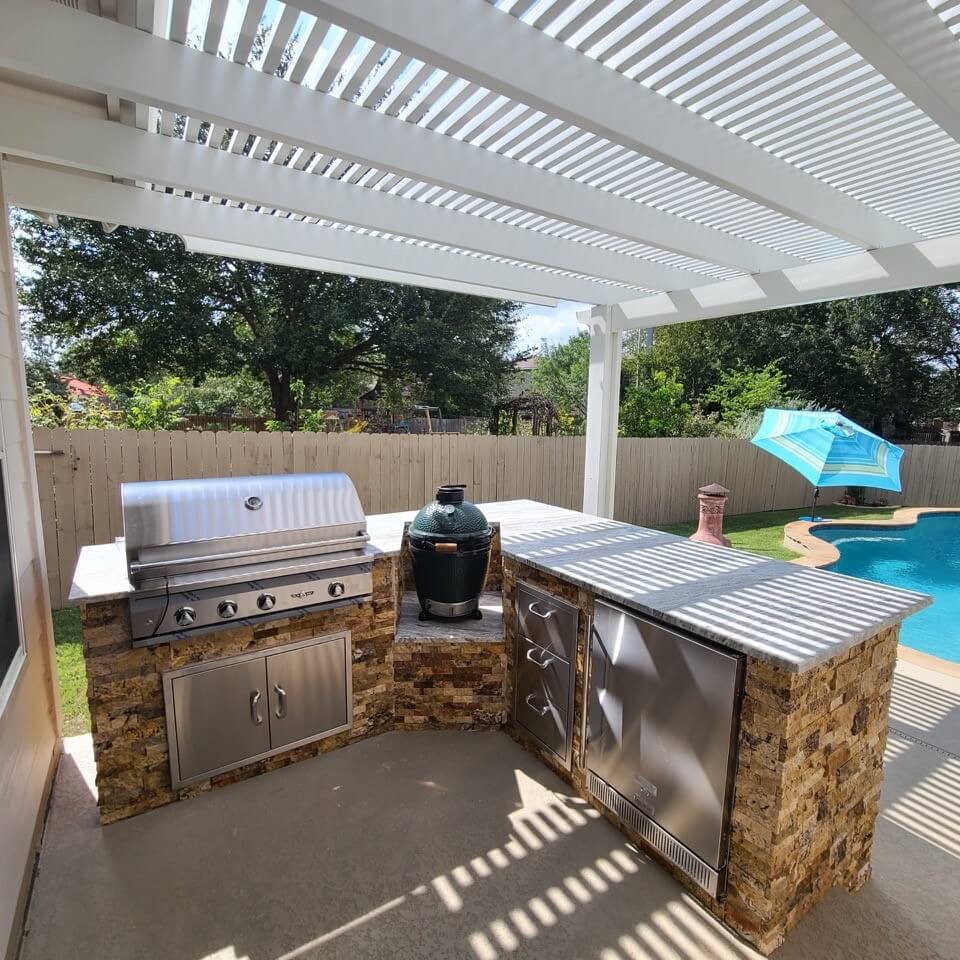
A patio cover gives you full shade and weather protection, which makes it the right call over dining areas, seating zones, or anywhere you want to sit outside, no matter what the sky is doing. Solid roof covers block sun and rain completely, while lattice-style covers filter light while still offering partial rain protection. Attached covers connect directly to your home and tend to cost less, while freestanding covers give you more flexibility in where they sit relative to the pool. If reliable coverage matters more than an open-air feel, Patio Covers in San Antonio, TX are the workhorse choice for most backyards.
Pergolas

A pergola offers partial shade and more architectural character, since an open structure lets in filtered light instead of blocking the sky entirely. They're a popular choice over an outdoor kitchen island or bar seating, and they work well as a visual anchor for the backyard design as a whole. Many homeowners add retractable canopies or climbing vines to a pergola later, which lets them dial shade up or down depending on the season without committing to a solid roof from day one. A pergola built with the right materials can handle the sun and the splash zone for years.
Material choice near a pool matters as much as the structure itself. Aluminum and powder-coated steel hold up well against pool chemicals, chlorine splash, and humidity without warping, rusting, or needing regular refinishing. Wood pergolas bring warmth and a more natural look, but they need more upkeep near a pool, since moisture and chemical exposure accelerate wear compared to a dry side yard or front porch.
How Do You Design an Outdoor Kitchen Near a Pool?
A well-designed poolside outdoor kitchen comes down to three things: placement that keeps smoke away from swimmers, components chosen for how the space actually gets used, and materials that can handle chlorine and splash. Get those three right, and the kitchen becomes one of the highest-use additions in the whole backyard.
Placement
Position the kitchen at a 90-degree angle to the pool, or at the far end of your covered area, so smoke and cooking heat don't blow directly over swimmers. This also keeps grease and food smells away from the water, which matters more than most homeowners expect once the kitchen is actually in daily use.
Components
From there, build in the pieces that actually get used:
- A built-in grill as the centerpiece, sized to how often you cook for a crowd versus a weeknight dinner.
- Countertop prep space for food and drinks, ideally shaded so surfaces don't get too hot to work on.
- A mini fridge, so nobody has to run inside mid-swim for a drink or a snack.
- Storage for utensils, plates, and pool gear, which keeps clutter off the counters.
- A bar or pass-through counter for serving people still in the water, which turns the kitchen into a social hub instead of a separate room.
Materials
Material choice matters just as much as layout. Stainless steel appliances, concrete or porcelain countertops, and powder-coated aluminum framing are built to handle splashes and chlorine in a way that untreated wood or basic laminate simply isn't. Cheaper materials might save money upfront, but pool chemical exposure tends to shorten their lifespan fast, which usually costs more in replacement and repair down the line.
Shade isn't optional here either. An outdoor kitchen without a cover gets hard to use once summer temperatures climb, so most work best positioned under a patio cover or an extended pergola. Given how many months of the year stay warm in San Antonio, a well-placed outdoor kitchen becomes a genuine daily-use space, not just a backdrop for the occasional cookout.
What Enclosure Options Work Best Near a Pool?
The two main options are screen enclosures, which keep bugs out without full climate control, and glass enclosures or sunrooms, which add year-round comfort at a higher cost. Both stretch the usable months and hours for a poolside space, just in different ways and at different price points.
Screen patio enclosures
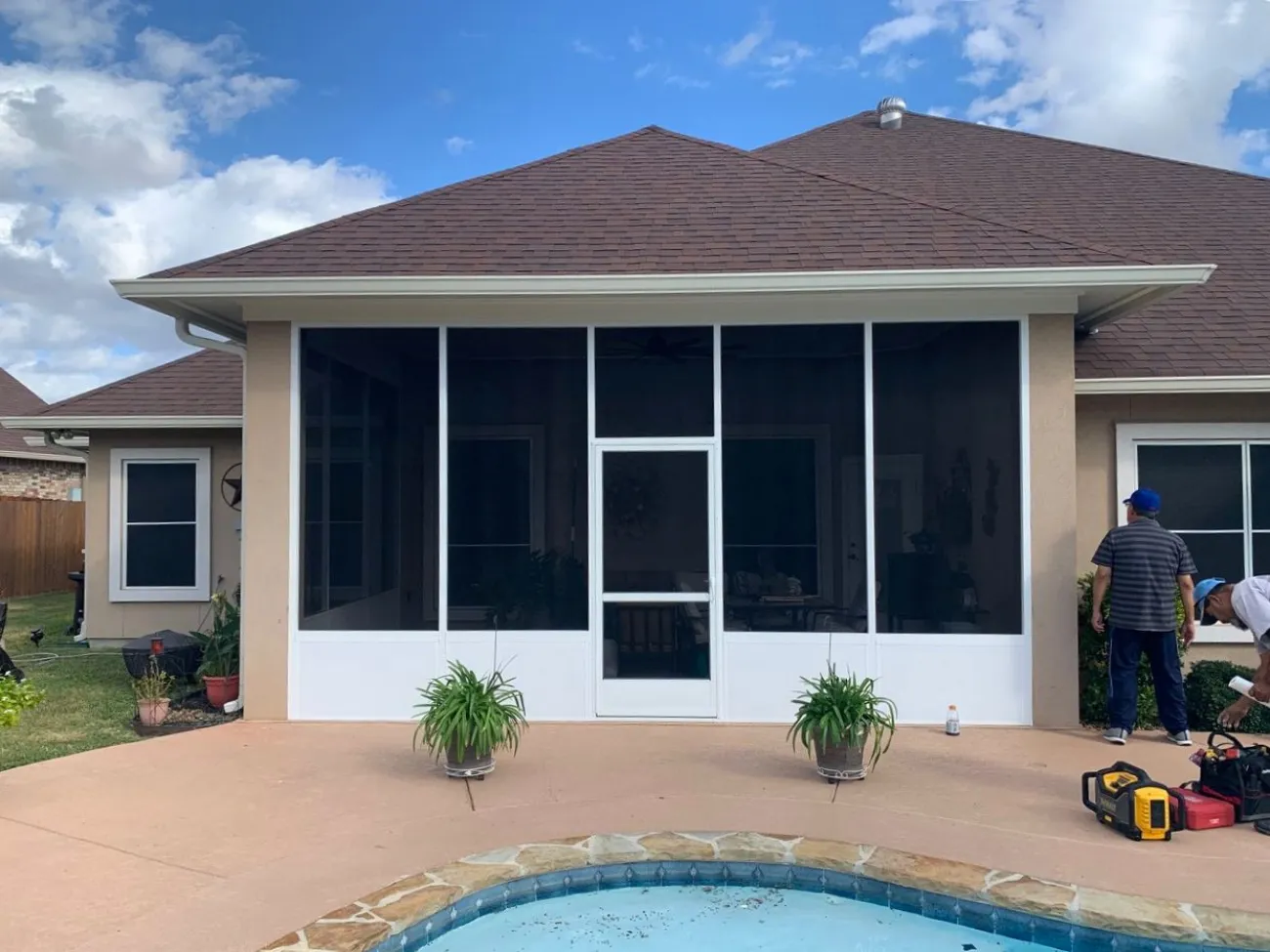
Built next to the pool, a screen enclosure creates a bug-free zone for dining and relaxing. That matters most during San Antonio's warm fall evenings, when mosquitoes tend to peak right as the weather finally cools enough to enjoy sitting outside longer. Screen enclosures also cut down on leaves and debris blowing into the pool area, which means less daily cleanup.
Glass patio enclosures and sunrooms

These go a step further with full climate control. A glass room next to the pool can become a breakfast nook overlooking the water, or a sitting room that connects the indoor and outdoor sides of your home into one continuous space. Because they're conditioned, they work in every season, including the handful of genuinely cold weeks San Antonio gets each winter.
Enclosures typically need a setback from the pool edge based on local code. It's far better to confirm this during your consultation than after materials are ordered. A patio enclosure built with the right clearances avoids costly redesigns down the line.
How Can Landscaping Make Your Pool Area Feel Like a Private Resort?
The right landscaping does more than improve curb appeal. It creates shade, adds privacy, and ties your pool, patio, and outdoor living areas into one cohesive design. By choosing plants and hardscape materials that thrive in the San Antonio climate, you can build a backyard that's both beautiful and easy to maintain.
Choose Plants That Thrive in South Texas
Native and drought-tolerant plants are a smart choice for poolside landscapes because they require less water and stand up well to the Texas climate. Ornamental grasses, native shrubs, and flowering perennials add color and texture while reducing ongoing maintenance. Smaller trees can also provide filtered shade without dropping excessive leaves into the pool.
Create Comfortable Paths and Gathering Areas

Walkways should safely connect the pool, patio, outdoor kitchen, and seating areas. Non-slip decking materials and clearly defined paths make it easier for family and guests to move around, especially when the pool area is busy. Thoughtful landscaping also helps separate activity zones while keeping the entire backyard connected.
Use Lighting to Extend Your Evenings
Outdoor lighting adds both beauty and functionality. Path lights improve safety after sunset, while accent lighting can highlight pergolas, patio covers, landscaping, and architectural features. Layered lighting creates a welcoming atmosphere that encourages you to enjoy your outdoor space long after the sun goes down.
Keep Maintenance in Mind
A beautiful backyard should also be practical. Selecting durable materials, low-maintenance plants, and efficient irrigation helps reduce upkeep without sacrificing appearance. When your landscaping complements your patio cover, pergola, or outdoor kitchen, the entire backyard feels like one well-planned outdoor retreat instead of a collection of separate projects.
How Do You Plan the Layout of a Poolside Backyard in San Antonio, TX?
Once you've evaluated your property and selected the features you want to include, the next step is bringing everything together into one cohesive layout.
Plan the Layout by Zoning
Start by zoning the space intentionally: a pool zone, a shade and living zone, a cooking zone, and a transition zone connecting your back door to the rest of the yard. From there, plan for traffic flow. The path from your back door to the pool to the kitchen should feel natural, not like an obstacle course around furniture and planters. Many homeowners also take this opportunity to look at how the house itself connects to the yard. Larger or repositioned windows facing the pool can bring more natural light in, making the indoor living space feel connected to the backyard. Speak with a window specialist in San Antonio, TX, if that indoor-outdoor sightline matters to you.
Ensure Matching Finishes
Keep materials and finishes consistent across the whole project. Matching or complementary finishes on your patio cover, pergola, kitchen, and enclosure create a backyard that reads as one cohesive space instead of a collection of separate projects bolted together over time. If you're refreshing the backyard as part of a bigger exterior update, tying the new structures into your home's siding color and texture pulls the whole property together instead of leaving the addition looking disconnected from the house.
If you're in Helotes, Boerne, Bulverde, or another north San Antonio suburb, factor in HOA guidelines early. These communities often have specific rules around materials, colors, and setbacks for poolside structures, and it's far easier to design around them from the start than to redo work after the fact.
Should You Build Your Poolside Backyard All at Once?
No. Most San Antonio homeowners complete their outdoor living space in phases rather than tackling every feature at the same time. Starting with a master plan allows you to prioritize the upgrades you'll use most today while making it easier to add new features as your needs and budget evolve.
Start With the Features That Add the Most Value
For many homeowners, a patio cover or pergola is the first addition after the pool is complete. Shade makes the space more comfortable throughout the year and creates a natural gathering area for family and friends. From there, an outdoor kitchen often becomes the next priority because it turns the backyard into a space that's just as enjoyable for entertaining as it is for swimming.
Plan Future Projects From the Beginning
Even if you aren't ready for every upgrade today, it's worth designing your backyard with future additions in mind. Leaving space for a screen enclosure, expanded patio, or additional seating area helps avoid costly redesigns later. A well-planned layout ensures every phase feels like part of one complete project instead of a series of separate improvements.
Budget With Long-Term Goals in Mind
Every project is different, but thoughtful planning can help you spread investments over time without sacrificing your overall vision. Serview Home Pros also offers financing options, including 0% interest for up to 18 months, giving you more flexibility to create the outdoor living space you want on a timeline that works for your budget.
Planning the entire project upfront, even if you build it in stages, often helps avoid redesign costs and ensures each addition fits into the overall vision.
What Should Be on Your Poolside Backyard Planning Checklist?
A successful backyard project starts long before construction begins. Taking time to plan the details upfront can help you avoid delays, stay within budget, and create an outdoor space that fits your lifestyle for years to come.
Confirm Property Requirements
Before finalizing your design, verify any HOA guidelines, property setbacks, or local requirements that could affect patio covers, pergolas, or enclosures. Addressing these early helps keep your project moving smoothly.
Choose Materials Built for the Texas Climate
Your pool area will be exposed to intense sun, humidity, and frequent temperature changes. Selecting durable materials such as powder-coated aluminum, stainless steel, concrete, and porcelain finishes helps reduce maintenance while keeping your outdoor living space looking its best.

Think Beyond the Pool
The most enjoyable backyards aren't centered solely around the swimming pool. Comfortable seating, shade, cooking space, and thoughtful lighting create places where family and friends naturally gather, even when no one is in the water.
Work With a Plan, Not Just a Product
Whether you're adding a patio cover today or envisioning a complete backyard transformation over several years, every improvement should support the same overall design. Working with an experienced team from the beginning helps ensure each addition complements the next, creating an outdoor space that feels intentional from start to finish.
What Does a Complete Poolside Backyard Cost in San Antonio?
There's no single number here, and anyone who gives you one without seeing your yard is guessing. Cost depends on scope, materials, and which elements you're including. A basic patio cover over an existing pool deck is a very different project from a full outdoor kitchen, pergola, and screen enclosure combination.
Most homeowners follow a similar path. A patio cover or pergola over the existing pool deck usually comes first, since it delivers the most immediate usability. An outdoor kitchen addition is the common next step, followed by an enclosure once you're ready for full-year use.
Financing can make a bigger first phase more realistic. 0% interest for up to 18 months means you can take on a more complete project without paying for everything upfront.
The most reliable way to understand real costs for your yard is a free in-home consultation, where your scope and materials get evaluated together instead of estimated in the abstract.
Ready to Build the Backyard Your Pool Deserves?
A complete poolside backyard is one of the best investments you can make in your San Antonio home, and it's more achievable when planned well from the start. Serview Home Pros has spent over three decades helping families across San Antonio turn a pool and an empty yard into a backyard they actually live in.
Ready to plan your poolside patio, shade structure, outdoor kitchen, or enclosed living space? Schedule your free consultation, and let's create a backyard that complements your lifestyle.
FAQ
Do I need a patio cover before adding an outdoor kitchen?
Not strictly, but it's strongly recommended. An outdoor kitchen without shade gets hard to use once summer heat sets in, and most homeowners end up adding cover later anyway. Planning for shade from the start saves you a redesign.
What should you plan before building a poolside outdoor living space?
Before starting your project, evaluate sun exposure, drainage, traffic flow, utility access, HOA requirements, and the features you want to include. Planning these details early helps create a cohesive backyard and makes it easier to add new elements over time.
How close can an outdoor kitchen be to my pool?
It depends on your layout, but placing the kitchen at a 90-degree angle to the pool, or at the far end of the covered area, helps keep smoke and heat away from swimmers. Exact spacing depends on your yard's dimensions and local code.
Are screen enclosures or glass enclosures better for a pool area?
It comes down to how you want to use the space. Screen enclosures are great for bug-free outdoor dining without full climate control, while glass enclosures or sunrooms offer year-round, climate-controlled use at a higher investment.
Will my HOA have rules about poolside structures?
Many north San Antonio suburbs, including Helotes, Boerne, and Bulverde, have HOA guidelines covering materials, colors, and setbacks for patio covers, pergolas, and enclosures near a pool. It's worth checking these before finalizing your design.
Can I build a poolside backyard in phases instead of all at once?
Yes, and it's actually the most common approach. Most homeowners start with a patio cover or pergola, add an outdoor kitchen next, and consider an enclosure later. A good initial design plan for these future additions from day one.
How do I get an accurate cost estimate for my project?
Costs vary too much by scope and materials for a general number to be useful. A free in-home consultation lets a builder evaluate your specific yard, pool layout, and goals to give you a real estimate.

More Posts


.png)
Get A Patio Cover Anywhere in San Antonio
Get in touch with Serview Home Pros today and let us help you turn your outdoor space into a beautiful haven. Your custom patio cover is just a call away!

