


Quick Answer
Choose a patio cover based on how you plan to use the space, how much shade and weather protection you need, and how much maintenance you want. Compare materials, roof styles, and attached or freestanding designs. Make sure the cover complements your home, preserves indoor natural light, and accounts for drainage and local building requirements.
Key Takeaways
- Start with everyday use: Plan around dining, relaxing, cooking, or entertaining.
- Match coverage to your needs: Solid roofs provide overhead sun and rain protection, while open lattice provides partial shade and airflow.
- Compare material upkeep: Aluminum and vinyl generally need less maintenance than wood.
- Consider your whole home: Coordinate the cover’s style and proportions while considering daylight through nearby windows.
- Plan practical details early: Include furniture clearance, lighting, fans, drainage, and required approvals.
- Compare complete estimates: Review materials, installation, foundation work, and optional features alongside ongoing maintenance.
Your patio looks inviting until the afternoon sun hits the chairs and sends everyone back inside. Or you set the dining table, then rain changes the plan. If that sounds familiar, choosing the right patio cover starts with a simple question: what would make you use the space more often?
The answer might be reliable shade, a sheltered outdoor dining area, or a comfortable place to entertain guests. The right patio cover should support those activities, suit your home's architecture, and fit your maintenance expectations. This guide helps you compare materials, layouts, and roof designs before committing to a project.
Start With How You Want to Use Your Patio
Before comparing patio cover options, picture an ordinary day outside. Will you eat breakfast there, read after work, host weekend dinners, or cook for friends? Write down your main use and two secondary uses.
For an outdoor living room, plan around seating and conversation. For outdoor kitchens, think about preparation, serving, and access to the house. A space that does several jobs needs clear paths between them.
A covered patio can provide shade, protect outdoor furniture from direct weather exposure, and improve the appearance of your backyard. It can also make the home feel more spacious by creating another usable gathering area. That does not automatically make it enclosed or officially counted interior space.
Decide what you want the cover to improve before choosing its shape. The best patio cover is the one that solves your actual problem.
Compare Materials With Your Upkeep in Mind
Material choice affects appearance, durability, and care. Explore aluminum, wood, and vinyl patio cover options, and ask which custom systems and finishes best fit your project.
Aluminum: A Practical Choice for Low Maintenance
Aluminum covers resist rust and offer a durable option with minimal upkeep. Aluminum frames can also support a simple, streamlined appearance. They are worth discussing if you want low maintenance materials rather than a structure that needs regular refinishing.
Ask about the finish, cleaning instructions, structural specifications, and roof system. Aluminum is a material category, not a promise that every product has identical performance.
Wood: Warmth and a Natural Look
Wood provides the character many homeowners want from natural materials. Consider its color, grain, and how it relates to nearby brick, stone, or planting.
Wood patio covers generally require more maintenance than aluminum or vinyl alternatives. Discuss painting, staining, or sealing requirements for the chosen product instead of assuming one schedule fits every structure.
If exposed beams are part of your vision, ask how they will look from the yard and from underneath. Balance the natural look with the care you are willing to provide.
Vinyl: Less Refinishing to Think About
Vinyl patio covers offer a clean appearance and resistance to moisture. Unlike wood, low-maintenance vinyl does not need routine painting or frequent refinishing to look its best.
Review available colors, support details, and product instructions. Choose quality materials based on the proposed system rather than assuming that all vinyl products perform the same way.
Choose Between Attached and Freestanding Covers
Where the cover sits can matter as much as what it is made from. Compare both layouts before ruling one out.
Attached Covers for a Connected Outdoor Room
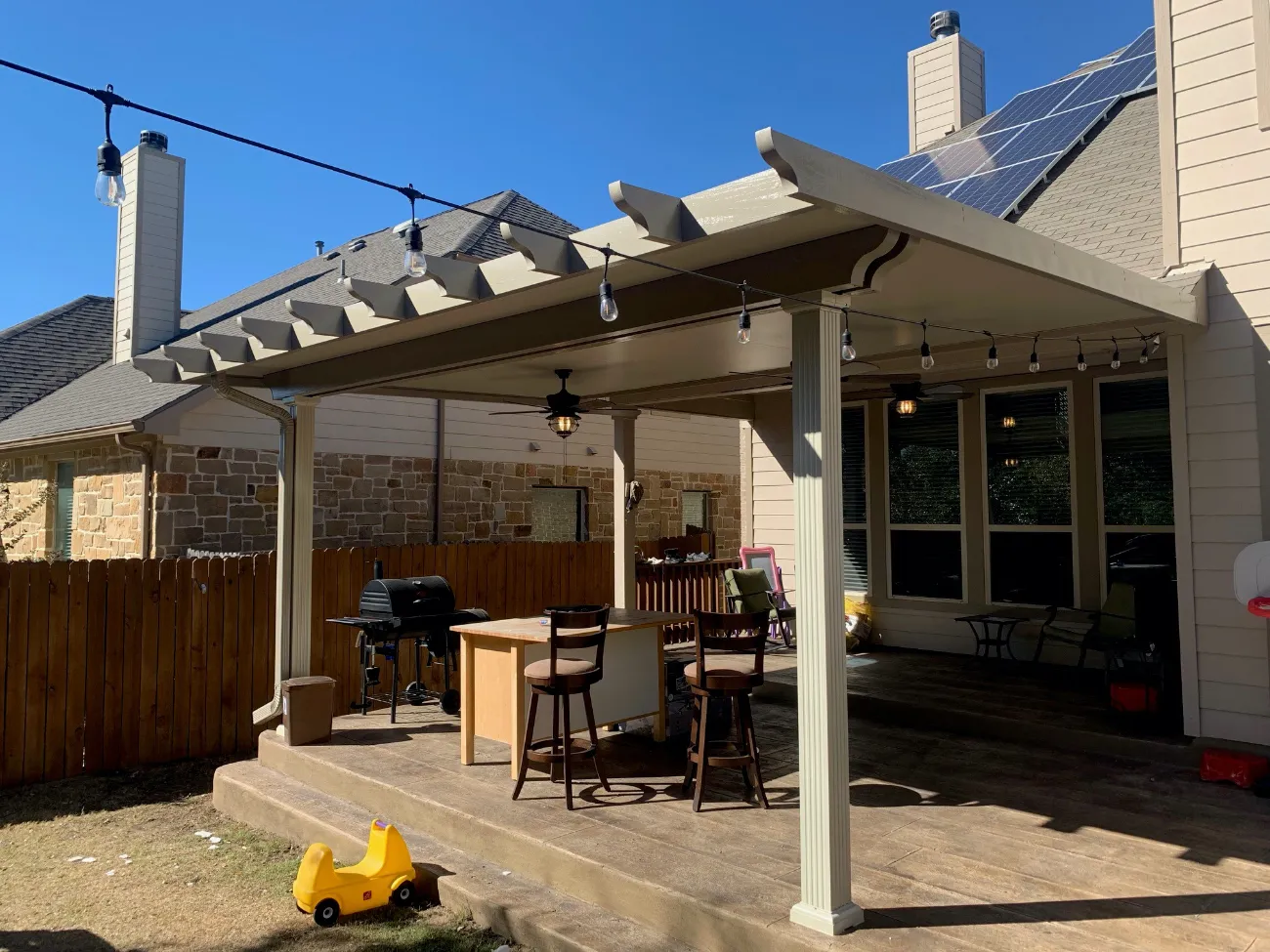
An attached cover may suit a patio beside the kitchen or living room. Picture carrying dinner outside, watching children from the doorway, or stepping into shade without crossing the yard.
Ask the installer to explain how the proposed structure connects to the house. Consider door clearance, nearby windows, and the effect on interior spaces. A connection that looks simple from outside still needs a sound structural design.
Freestanding Structures for Separate Gathering Spaces
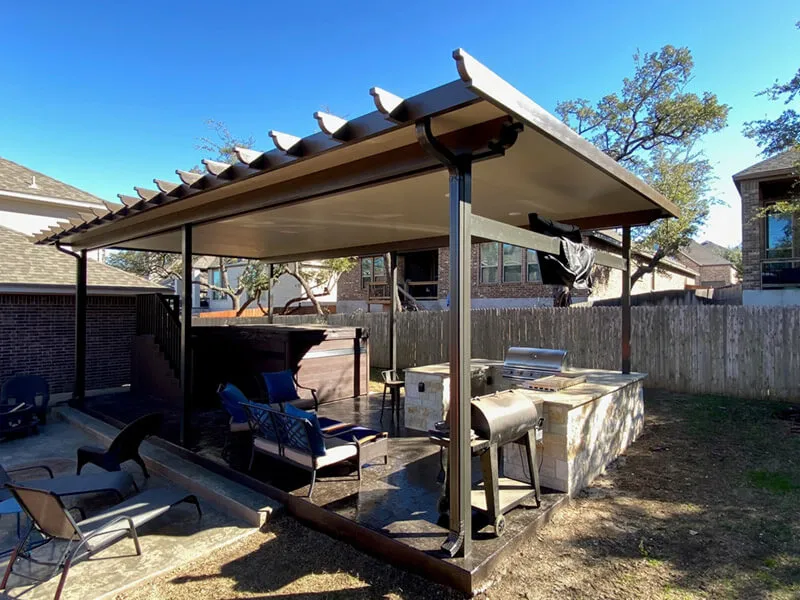
Freestanding structures offer another layout option when you want a destination elsewhere in the yard. They can define seating near a pool, garden, or separate patio area.
Compare the walk from your back door with the view from inside. Would the location feel convenient enough for everyday use? Would it preserve access to gates and other outdoor features?
A freestanding structure still needs appropriate support. Ask about foundation work and ground level conditions before finalizing its position.
Select a Roof for Shade, Light, and Weather Protection
Roof style affects how sheltered the patio feels and how much daylight reaches it. Compare cover options around your priorities rather than appearance alone.
Solid Roofs for More Protection
A solid roof provides overhead protection from direct sun and rain. It is a useful option when you want a sheltered dining space or reliable coverage above seating.
However, an open-sided structure cannot block every gust, splash, or low-angle ray of sunlight. Wind-driven rain may still reach furniture near the edges. Think of a solid cover as offering protection overhead, not sealing the outdoor area.
Insulated roof panels can help reduce radiant heat beneath the cover. Ask how the proposed roof system addresses heat and how it compares with a non-insulated option.
Open Lattice for Natural Light and Airflow
An open lattice design filters sunlight and preserves an open air feel. Pergolas can be attached or freestanding, so they are not limited to self-standing structures.
Consider this approach if you value natural surroundings, airflow, and a lighter visual footprint. Climbing plants can add visual interest, but discuss their weight and support needs before planning them around the structure.
A fixed lattice does not automatically provide adjustable sunlight exposure. Its shade depends on the beam arrangement and sun position.
Adjustable Louvers for Changing Coverage
Adjustable louver designs give you full control over sunlight, airflow, and shade throughout the day. Ask which systems are available and what weather protection they provide when closed.
Do not assume adjustable louvers and retractable covers are interchangeable. Confirm how the proposed roof operates, what maintenance it needs, and what its manufacturer says about rain and wind.
Protect Natural Light Inside Your Home
Before installing a patio cover, consider how it will affect natural light and views inside your home:
- Check indoor lighting: Look at your patio from indoors before deciding on roof depth. Identify which nearby windows brighten your kitchen, dining area, or living room.
- Discuss light transmission: Ask your builder how roof height, depth, ceiling color, and partially open sections could affect indoor brightness.
- Track sun exposure: Take photos throughout the day to record direct sunlight, glare, and shade patterns. Use them to explain your goals during the consultation.
- Consider interior views: Think about how the cover will frame your garden and complement your interior design while keeping the view open.
- Review both perspectives: Check the design from inside and outside to make sure your outdoor living area works well with your indoor rooms.
Match the Cover to Your Home's Architectural Style
A well designed patio cover should feel connected to the house. Study its rooflines, trim, windows, and exterior colors before selecting decorative details.
Modern and Contemporary Homes
For modern homes, consider clean lines, restrained colors, and a simple roof profile. Contemporary architecture may inspire a contemporary feel, but a roof that looks flat still needs appropriate drainage.
Ask how posts, lighting, and visible connections will appear together. Contemporary homes do not need identical covers; proportions should guide the design.
Traditional Styles and Natural Finishes
For traditional styles, explore a roof profile and finish that relate to the existing house. Traditional covers can repeat familiar colors or details without copying every feature.
If your home has Craftsman architecture, bring photos of the woodwork and roof details you want reflected. Discuss wood-framed options as a design preference, not a rule.
Farmhouse or Mediterranean inspiration can also guide your choices. Show examples of exposed beams or curved details you like, then ask what is appropriate for the structure.
A Blend of Old and New
You can request a balance of contemporary and traditional elements. Try pairing a simple roof shape with a warmer finish or familiar trim color.
Use your home's design language as a guide. Choose a few details to repeat, and let the cover become a coordinated focal point rather than an unrelated addition.
Size the Coverage Around Furniture and Movement
Before approving dimensions, check that your patio cover will suit your furniture, walking paths, and shade needs:
- Test the furniture layout: Mark the proposed area and position your dining table and chairs. Pull the chairs out to check there is enough room to sit comfortably.
- Keep walking paths clear: Check routes from the house to the grill, garden, and gate. Allow space for people to pass while others serve food or gather.
- Leave room for each activity: Include side tables and room to stretch in lounge areas. Separate dining and seating zones enough to avoid crowding.
- Check shade when you need it: Consider sun exposure at the times you expect to use the patio. Shadows change throughout the day.
- Plan post placement: Ask where support posts will go. Keep doors, steps, and important paths clear, with room for future furniture changes.
Plan Fans, Lighting, and Future Features Early
If you want ceiling fans or plan to add lighting, discuss them before construction. Include ambient lighting for conversation and brighter lighting where people prepare or serve food.
Think about switches and outlets from a user's perspective. Can you reach the light switch easily? Where would you charge a device or plug in equipment?
List possible future additions, even if they are not part of today's budget. Ask whether the structure should accommodate hanging baskets, screens, or heavier fixtures later.
Heavy loads need planned support. Do not assume a finished beam can hold any accessory you attach.
A thoughtful electrical plan helps the outdoor living space work beyond daylight hours. Decide which features you need now and which can wait.
Check Drainage and Local Building Requirements
Before construction, review these practical details with your contractor:
- Plan roof runoff: Ask how gutters, downspouts, and grading will direct water away from your house and walking areas.
- Prevent water pooling: Identify low spots where water could collect. Discuss moisture management and materials suited to your weather conditions.
- Confirm building requirements: Check which permits, structural requirements, and local wind standards apply to your location and project.
- Clarify approval responsibilities: Ask who handles permit submissions and any HOA approvals, and whether these are included in the project scope.
- Discuss design changes: Find out whether changes to the plan would require updated approvals, additional costs, or a revised schedule.
Compare Complete Estimates and Long Term Value
Size, materials, roof type, foundation needs, and electrical features all affect project cost. Compare estimates with the same scope so you can understand what each includes.
Ask for the proposed materials, roof system, installation work, and optional features to be identified. Discuss how insulation or a more complex roof changes the project.
Separate essentials from preferences. Reliable coverage may matter more than decorative details. Lighting might matter more than extending the roof over an unused corner.
Consider maintenance alongside the initial investment. The right patio cover should fit both your budget and the time you want to spend caring for it.
Our guide to choosing a patio contractor can help you prepare questions about the company doing the work.
Frequently Asked Questions
Can a Patio Cover Provide Year Round Comfort?
A cover can make an outdoor space usable more often, but weather conditions still affect comfort. If you want greater enclosure or temperature control, read Patio Covers vs. Enclosures vs. Sunrooms.
Does a Solid Roof Block All UV Rays?
An opaque roof blocks overhead sunlight through the covered area. UV rays can still enter from the sides or reflected surfaces, so ask about the protection provided by the full layout.
How Do I Find the Perfect Patio Cover?
Define your main activity, shade needs, maintenance preferences, and style goals. Then compare patio cover options with an installer who can assess your property.
Start Planning With Serview Home Pros
Turn your vision into reality with Serview Home Pros. Schedule a free estimate to discuss a custom patio cover design tailored to your home.
Having rough measurements, layout photos, and a short list of priorities ready will help us tailor the consultation to your needs.

More Posts


.png)
Get A Patio Cover Anywhere in San Antonio
Get in touch with Serview Home Pros today and let us help you turn your outdoor space into a beautiful haven. Your custom patio cover is just a call away!

