


@font-face{font-family:'Erbaum';src:url('https://cdn.prod.website-files.com/60a6d1ea634f66cc8a8a8d14/68507f077e33f26b658add3c_erbaum.otf') format('opentype');font-weight:100 900;font-style:normal;font-display:swap}@font-face{font-family:'Roboto';src:url('https://cdn.prod.website-files.com/60a6d1ea634f66cc8a8a8d14/68509120c03ba9474aad4630_Roboto-Regular.ttf') format('truetype');font-weight:100 900;font-style:normal;font-display:swap}
💡 Quick Answer
For San Antonio homeowners, a screen enclosure is the right choice when bugs are the primary problem and budget is a real constraint — it delivers complete pest protection for 6–7 comfortable months per year. A glass enclosure or sunroom ($8,000–$80,000) is the right choice when you need year-round use, want to add official square footage, and plan to sell within 3–7 years — it's the only outdoor structure type that consistently returns 100–110% of project cost at resale. Patio covers ($4,000–$18,000) cut the temperature underneath by up to 15–20°F and return 70–100% at resale. Pergolas ($1,450–$35,000) offer the lowest protection but maximum open-air ambiance. Your climate math — not catalog aesthetics — should drive the decision.
📊 Key Takeaways
Here are the numbers that drive the screen enclosure vs. glass enclosure decision for San Antonio homeowners as of 2026.
Screen enclosure add-on cost to existing covered patio
Glass enclosure / sunroom total installed cost range
Sunroom resale ROI — only structure type to recoup full cost
Comfortable usability of a screen enclosure in San Antonio
Usability of a 4-season glass enclosure with HVAC
San Antonio days per year in the 90s°F — the core climate argument
San Antonio active mosquito days — screen enclosures solve this directly
Temperature reduction under insulated patio cover vs. bare metal roof
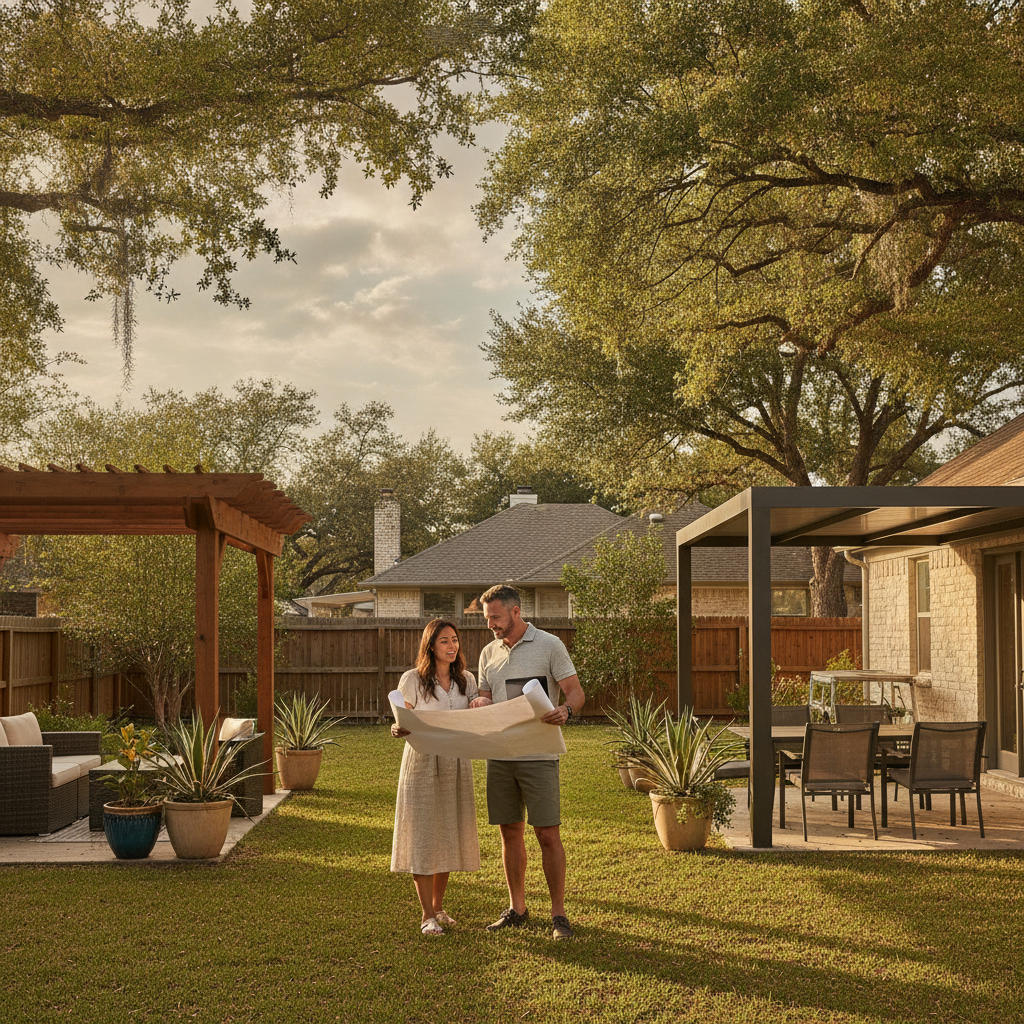
The right patio enclosure for a San Antonio backyard is determined by one question: what problem are you actually trying to solve? If mosquitoes are ruining your evenings from March through October, a screen enclosure at $2,000–$5,000 is the most direct fix. If you want to use the space all 12 months and add official square footage to your home, a glass enclosure or sunroom at $8,000–$80,000 is the only structure that delivers both. If shade and partial rain protection are enough, an insulated patio cover at $7,000–$18,000 cuts the temperature underneath by 15–20°F and returns 70–100% at resale. And if open-air ambiance is the priority above all else, a pergola at $1,450–$5,750 handles that — at the cost of minimal actual protection. San Antonio averages 122 days per year in the 90s°F and over 230 active mosquito days annually. That climate math is what should drive your outdoor structure decision, not which option looks best in a showroom.
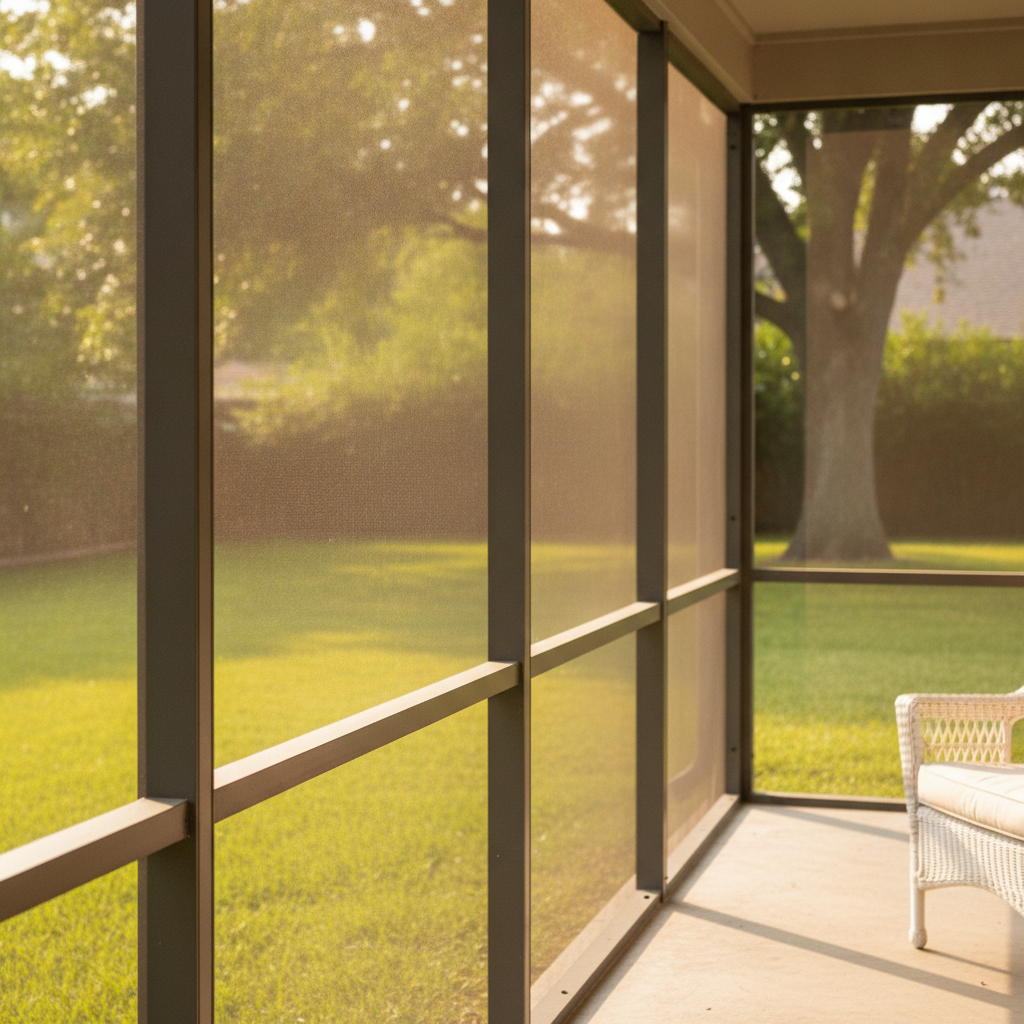
Option A
Screen Enclosure
Bug-free fresh air at the lowest cost
Option B
Glass Enclosure / Sunroom
Year-round living space that adds real square footage
How a Screen Enclosure Works for Your San Antonio Outdoor Living Space
A screen enclosure converts an existing covered patio — or a new freestanding structure — into a fully enclosed space by installing aluminum framing and screen mesh panels around the perimeter. The aluminum frame handles the structural design, attaches to the existing solid roof or a new continuous roof system above, and holds the screen panels in place along the sides and any open ends. The result is an outdoor living space that lets fresh air move freely while keeping mosquitoes, flies, and other pests completely out.
The core limitation of a screen enclosure is that the temperature inside mirrors the outdoors. Ceiling fans help, and the shade from the solid roof above cuts direct sunlight, but a screen room cannot fight a San Antonio afternoon in July — when highs sit in the mid-to-upper 90s°F and humidity averages 80% by morning. This is not a hidden flaw; it's a design tradeoff worth being clear-eyed about. Screen enclosures are built for the 6–7 months per year when San Antonio's climate is actually pleasant: March through May and September through November are genuinely great months to live in a screened-in patio.
Screen rooms cost roughly 50% less than glass enclosures for the same footprint, which makes them an attractive option for homeowners whose primary pain point is pest control rather than year-round climate comfort. Aluminum frame systems run $80–$150 per linear foot installed; glass panel systems for three-season rooms run $200–$400 per linear foot. The maintenance requirements for a screen enclosure are minimal: aluminum resists corrosion, frames don't rot, and individual screen panels can be replaced without rebuilding the whole structure. For homeowners who want the open-air connection to the backyard — the sound of the yard, the feel of the breeze — without bugs, a screen enclosure is the practical answer at the lowest cost.
How a Glass Enclosure (Sunroom) Turns a Covered Patio Into Year-Round Living Space
A glass enclosure or sunroom addition replaces open-air access around an existing covered patio — or builds an entirely new attached structure — with insulated glass panels, sealed aluminum or vinyl frames, and a solid roof designed to provide complete protection from the elements. Three-season rooms use ventilating glass panels that open to allow air flow during mild months and close tight to block rain, wind, and cold. Four-season sunrooms add HVAC, insulated glass, and full weatherproofing to create a living area that functions every month of the year.
The structural integrity required for a glass enclosure is significantly higher than for a screen room. Glass panel systems must handle wind load, rain load, and in rare San Antonio cases, hail impact. The structural design typically involves heavier aluminum framing, a watertight roof-to-wall connection, and foundation work to support the added weight. That's why glass enclosure projects are treated as home additions in permitting — they require the same permit process as adding a room to the house, including full city permit and HOA approval before construction begins.
The return on investment case for glass enclosures is the strongest of any outdoor structure type. A permitted sunroom addition returns 100–110% of project cost at resale and counts toward the home's official square footage in an appraisal — a meaningful distinction in San Antonio's growing submarkets like Boerne, Schertz, and Helotes, where buyers are paying close attention to livable square footage. The functional case is equally strong: San Antonio homeowners with an enclosed patio use that space 8–9 months per year on average versus 4–5 months for an open patio. A four-season sunroom pushes that to all 12. Energy bills for the main house can also drop slightly when a sunroom acts as a thermal buffer between the interior and the outdoors, especially in summer — insulation helps moderate the heat load on the home's HVAC system.
Glass enclosures offer more customization than screen rooms: custom designs can match the home's existing roofline, incorporate built-in lighting, add a dining area with full weather protection, or configure the space as a home office or playroom. Three-season glass rooms are a strong middle-ground choice at $80–$230 per square foot — they provide complete weather protection and full bug control with ventilating glass panels that handle everything but the peak of July and August in San Antonio. For homeowners planning to sell within 3–7 years, the higher upfront cost of a glass enclosure is the clearest path to getting the investment back — and the only outdoor structure type that reliably delivers a full return on investment.
Patio Enclosure vs. Pergola vs. Patio Cover: The Key Differences at a Glance
Dimension
Screen Enclosure
Glass Enclosure / Sunroom
Upfront Cost
$2,000–$5,000 add-on to existing covered patio; $50–$175/sq ft new build
$8,000–$80,000 total; $80–$230/sq ft (3-season); $200–$400/sq ft (4-season)
Bug & Pest Protection
Complete — screen mesh blocks mosquitoes, flies, and pests year-round
Complete — fully enclosed space with glass panels and sealed frames
Heat & Climate Control
None — temperature inside mirrors outdoors; fans help but can't fight SA summers
Full (4-season with HVAC) or partial (3-season with ventilating glass panels)
Weather Protection
Partial — screens filter wind and debris; heavy rain and cold pass through
Full — glass panels and solid roof provide complete protection from the elements
Resale ROI
Moderate — adds curb appeal but rarely counts as heated square footage
100–110% of project cost recouped; qualifies as added square footage in appraisals
Permitting Required
Yes for new structures; add-ons to existing covered patio may be simpler; HOA sign-off required first
Yes — treated as a home addition; full permit and HOA approval required before build
Months of Usability
~6–7 months/year (comfortable March–May, September–November; summers are still hot)
12 months/year with HVAC; 8–9 months for 3-season glass rooms in San Antonio
Best Fit
Homeowners whose primary problem is mosquitoes and want open-air feel on a tighter budget
Homeowners who want year-round use, maximum home value, and a true indoor-outdoor room
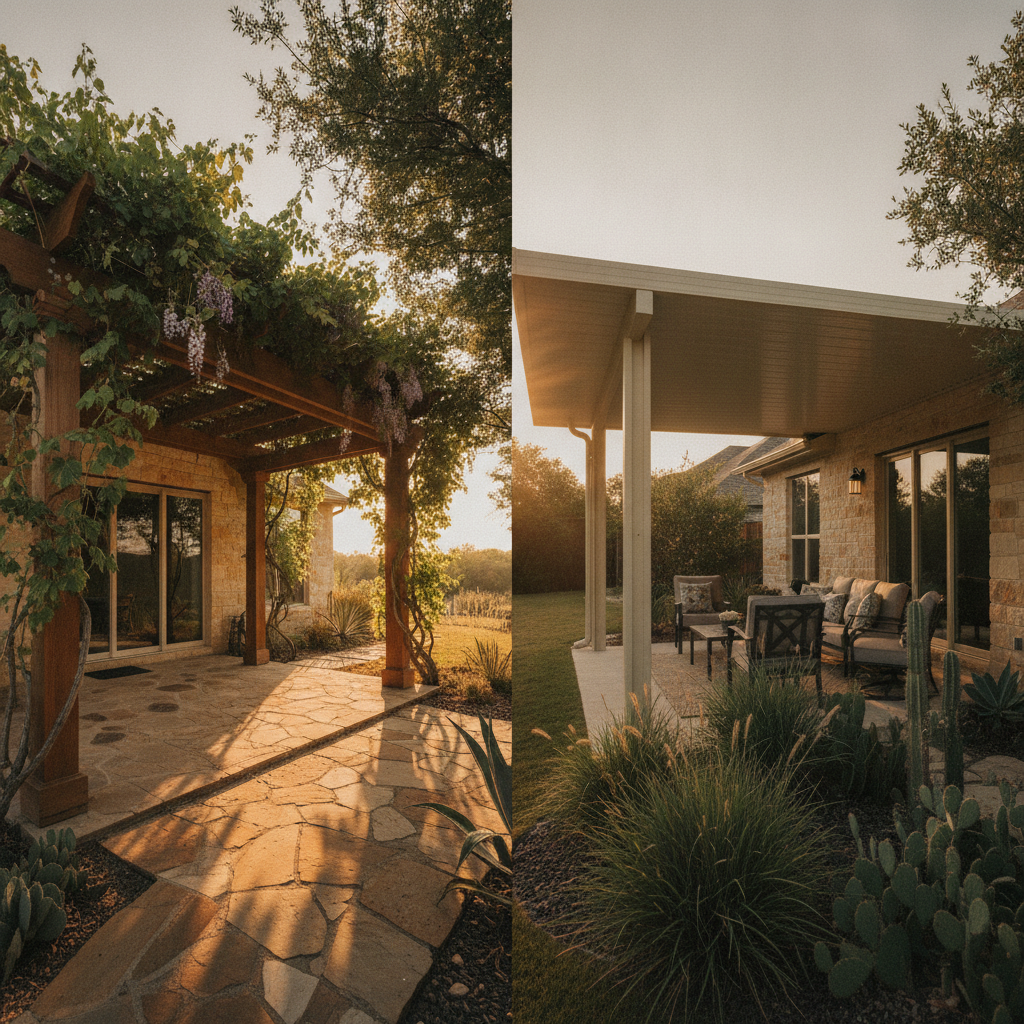
Patio Enclosure vs. Pergola vs. Patio Cover: San Antonio's Climate Math Decides
San Antonio averages 122 days per year in the 90s°F and 230+ active mosquito days. An open deck or bare pergola leaves you exposed for most of those days. A screen enclosure solves the bug problem at $2,000–$5,000 add-on cost. An insulated patio cover cuts the temperature underneath by up to 15–20°F. A glass enclosure or sunroom solves both and adds official square footage to your home. The right outdoor structure depends on your primary pain point — bugs, heat, year-round use, or resale value — not on which option looks best in a catalog. Serview Home Pros has installed all four types across San Antonio, Boerne, Schertz, Helotes, and surrounding areas for over 30 years. We never ask for money upfront — you pay when the job is done right. Book a free in-home estimate and we'll help you figure out which structure actually solves your backyard problem.
Choose a Screen Enclosure If Bugs and Budget Are Your Primary Outdoor Living Concerns
A screen enclosure is the most direct, lowest-cost fix for San Antonio's mosquito problem. At $2,000–$5,000 as an add-on to an existing covered patio, it delivers a fully enclosed outdoor space that the whole family can use from March through November — at roughly half the cost of a glass enclosure for the same footprint.
The honest limitation: a screen enclosure will not solve San Antonio's summer heat. The temperature inside mirrors the outdoors. Ceiling fans and shade from the solid roof above help, but if July and August use matters to you, a screen room is not the right structure — a glass enclosure with HVAC is. For homeowners whose primary complaint is pests, not heat, a screen enclosure is the informed decision.
Choose a Glass Enclosure or Sunroom If You Want Year-Round Outdoor Living Space and Maximum Resale Value
A glass enclosure or sunroom addition is the right call when the space needs to function every month of the year and when resale value within 3–7 years is a real factor. It is the only outdoor structure type that consistently returns 100–110% of project cost at resale — and it adds official square footage to the home's appraisal.
The honest limitation: glass enclosures cost significantly more than screen rooms, require full permitting as a home addition, and take longer to build. If resale is 10-plus years out and budget is tight, the return on investment argument weakens. But for homeowners who want a functional living space that works all four seasons, adds square footage, and pays back at resale, a glass enclosure is not a luxury — it's the practical long-term choice.
When You Should Run Both: Screen Enclosure Plus Patio Cover
The most cost-efficient combination for many San Antonio homeowners is a screen enclosure built over an existing insulated patio cover. The patio cover handles heat — insulated aluminum panels keep the space up to 15–20°F cooler than a bare metal roof, which makes a real difference when afternoon highs sit in the mid-to-upper 90s°F. The screen enclosure handles bugs. Together, they extend comfortable outdoor living from 4–5 months per year on an open patio to 7–8 months per year without requiring HVAC or the full cost of a glass enclosure.
This combination works best when you already have a solid covered patio with a permitted roof — the screen add-on costs $2,000–$5,000 installed and can usually be permitted as an accessory to the existing structure rather than as a full home addition. The resulting outdoor living space provides complete protection from pests, meaningfully cooler temperatures from the insulated panel roof, partial rain protection from the solid roof above, and the open-air connection that a fully enclosed glass room doesn't provide. For homeowners whose budget is under $25,000 and who want a practical upgrade to their backyard without committing to a full sunroom addition, this pairing is the most balanced solution San Antonio's climate math supports.
Which Outdoor Structure Fits Your Situation? A Budget and Use-Case Guide
Screen Enclosure
The Right Patio Enclosure for Bug Control on a Real Budget
A screen enclosure makes the most sense when mosquitoes and insects are the primary problem and you already have a solid roof over your covered patio. Adding a screen system to an existing structure runs $2,000–$5,000 installed — a fraction of what a glass enclosure costs, with the same complete protection from pests. San Antonio's mosquito season stretches from March through October, peaking mid-summer. A screen room solves that problem on day one without requiring HVAC or insulated glass panels.
This option also fits homeowners who genuinely want the open-air feel — fresh air moving through, the sounds of the backyard, that indoor-outdoor connection — and don't want walls of glass closing everything off. Screen enclosures use aluminum framing with strong structural integrity that holds up well against San Antonio weather, requires minimal maintenance, and can be built to match your home's existing roofline. If your budget is under $10,000 and bugs are your main complaint, a screen enclosure is the practical answer. It won't solve the 122 days above 90°F, but ceiling fans and shade from the solid roof above make the space usable and comfortable for most of the year.
Patio Cover or Pergola
Patio Cover vs. Pergola: Open-Air Outdoor Living at Two Very Different Price Points
A patio cover and a pergola both solve the open-air living question — shade and partial rain protection without fully enclosing the space — but they do it at very different price points and with different levels of actual protection. A basic attached aluminum or wood patio cover for a 12x16 foot space runs $4,000–$10,000 installed. An insulated aluminum panel cover costs $7,000–$18,000 and keeps the space up to 15–20 degrees cooler than a non-insulated metal roof — a real difference when San Antonio afternoon highs regularly sit in the mid-to-upper 90s°F. Patio covers also return 70–100% of project cost at resale, making them one of the more efficient outdoor investments in the Texas market. They require a city permit for attached structures, and HOA approval comes first in most San Antonio neighborhoods.
Pergolas are the ambiance option. A standard pergola costs $1,450–$5,750; a louvered or motorized version runs $15,000–$35,000 installed. They offer partial shade through open rafters or lattice, support climbing plants like wisteria and other vines, include built-in lighting options, and create a distinct aesthetic that many homeowners love. Pergolas provide only filtered sunlight and no real rain protection, and they return just 50–70% of project cost at resale — the lowest ROI of the four structure types. In San Antonio, where intense sun and strong winds during spring storms are facts of life, a pergola works best as a complement to an existing covered structure or for homeowners who prioritize open-air beauty and aesthetics over protection. If pests are a concern, a screen enclosure or glass enclosure will always outperform a pergola. If shade and weather protection are the goal, a solid patio cover wins on both cost and return on investment.
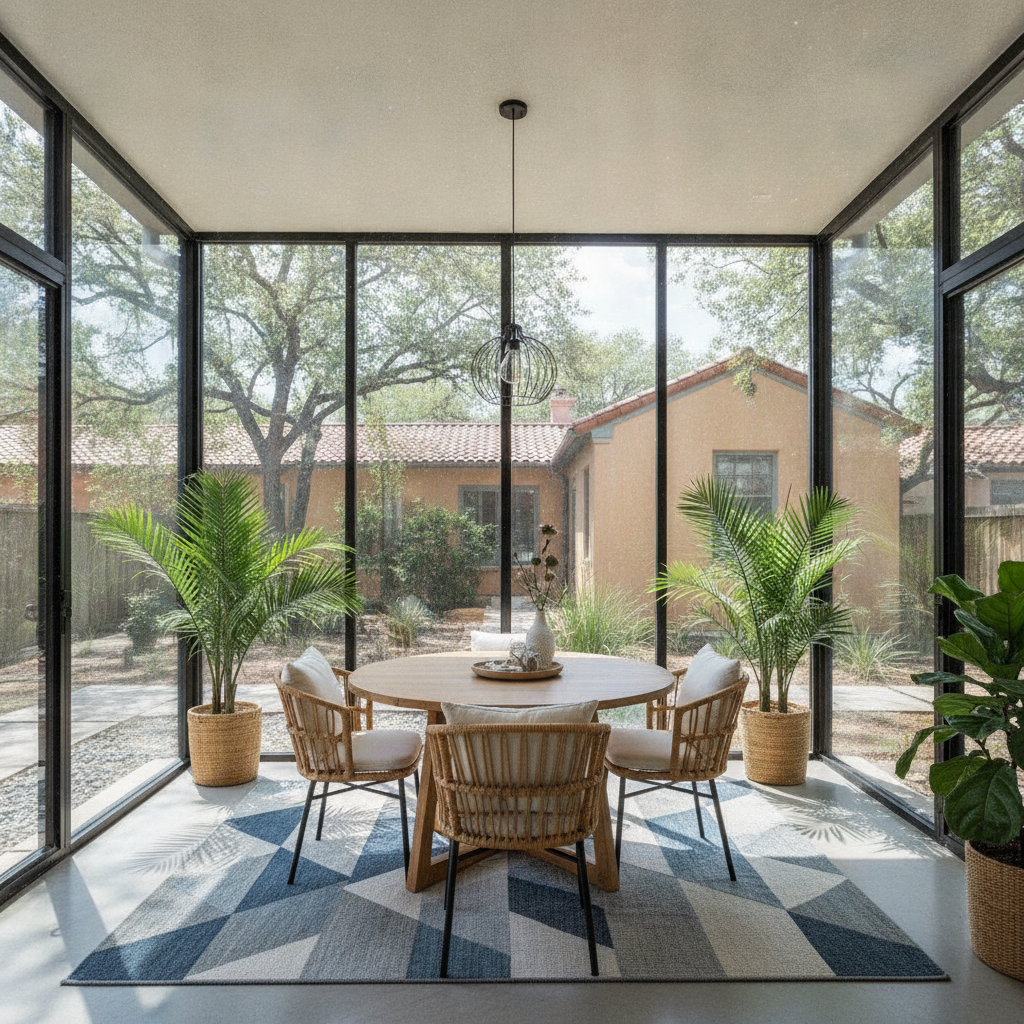
Glass Enclosure / Sunroom
When Only a Fully Enclosed, Year-Round Outdoor Living Space Will Do
A glass enclosure or sunroom addition is the right call when homeowners need the space to function every month of the year and want maximum return on investment at resale. San Antonio homeowners with an enclosed patio use that space 8–9 months per year on average; a four-season sunroom with HVAC pushes that to all 12 months. At $200–$400 per square foot installed, a full sunroom costs more upfront — but it is the only outdoor structure type that consistently returns 100–110% of its cost when the home sells, and it counts toward the home's official square footage in an appraisal.
This option fits households where the backyard space needs to double as a dining area, a home office, a playroom, or a year-round entertaining space — not just a place to sit on a nice evening. Three-season glass rooms ($80–$230/sq ft) are a strong middle-ground choice: they provide complete weather protection and full bug control, with ventilating glass panels that handle all but the hottest San Antonio afternoons. In growing areas like Boerne, Schertz, and Helotes, where buyers are paying close attention to livable square footage, a permitted and well-designed sunroom addition can genuinely move the needle on appraised home value. Serview Home Pros has built both three-season and four-season glass enclosures across the San Antonio metro for over 30 years and handles the permitting process start to finish — including HOA coordination by neighborhood.
Every outdoor structure type offers unique benefits, and the right choice comes down to climate considerations specific to San Antonio, your budget, your resale timeline, and your primary pain point. Screen enclosures solve the pest problem at the lowest cost and preserve the open-air outdoor living experience many homeowners want. Glass enclosures and four-season sunrooms solve bugs, heat, and resale value in one structure — at a higher upfront investment that pays back in full at resale. Patio covers solve heat and rain protection with minimal complexity and strong ROI. Pergolas solve aesthetics and partial shade, and serve as an excellent complement to an existing covered structure for homeowners who want climbing plants, built-in lighting, and filtered light without full enclosure.
If you are ready to get real use out of your backyard — whether that means a screen enclosure that finally beats San Antonio's mosquito season, an insulated patio cover that keeps the space 15–20 degrees cooler on those 90°F afternoons, or a glass enclosure that adds year-round living space and boosts your home's appraised value — Serview Home Pros is here to help you make an informed decision. With over 30 years serving San Antonio and the surrounding communities, our licensed and insured team builds patio covers, screen enclosures, glass enclosures, and pergolas with ICC-certified project oversight. We handle the permits, know the HOA rules by neighborhood, and never ask for money upfront — you pay when the job is done right. Contact us today to schedule your free consultation and let's build the outdoor living space your home has been missing.
Ready to get started? Contact Serview Home Pros today.
Frequently Asked Questions
Are
worth it in San Antonio?
Yes — for San Antonio specifically, patio enclosures are worth it because the climate creates two distinct problems that an open patio cannot solve: 230+ active mosquito days per year and 122 days in the 90s°F. A screen enclosure solves the bug problem starting at $2,000–$5,000 as an add-on. A glass enclosure solves both bugs and heat while adding official square footage and returning 100–110% of project cost at resale. The only scenario where an enclosure is not worth it is when your primary goal is purely aesthetic ambiance on a tight budget — in that case, a pergola at $1,450–$5,750 serves that purpose, though with 50–70% resale ROI and minimal weather protection.
How much does a patio enclosure cost in San Antonio?
A screen enclosure added to an existing covered patio costs $2,000–$5,000 installed in the San Antonio market as of 2026. Building a new screened-in structure from scratch runs $50–$175 per square foot, or roughly $80–$150 per linear foot for the aluminum frame system. A glass enclosure or sunroom costs $8,000–$80,000 total — three-season glass rooms run $80–$230 per square foot, and four-season sunrooms with HVAC and insulated glass panels run $200–$400 per square foot. Permitting adds $100–$500 in city fees depending on project scope, and HOA approval is required in writing before you can apply for the city permit in most San Antonio neighborhoods.
Does enclosing a patio add value to a home?
Yes, but the type of enclosure determines how much value it adds. A glass enclosure or permitted sunroom addition returns 100–110% of project cost at resale and qualifies as official square footage in a home appraisal — making it the highest-ROI outdoor structure type. A screen enclosure adds meaningful curb appeal and backyard usability, but it does not typically count as heated living space and therefore does not move the appraisal needle the same way. In fast-growing San Antonio submarkets like Boerne, Schertz, and Helotes, buyers pay close attention to livable square footage, which makes a permitted sunroom addition a strong investment for homeowners planning to sell within 3–7 years.
What is the difference between a screen enclosure and a glass enclosure?
The main difference is climate control and weather protection. A screen enclosure uses aluminum framing and screen mesh to create a fully enclosed space that keeps out mosquitoes, flies, and other pests — but the temperature inside mirrors the outdoors, so it offers no heat or cooling control. It provides partial weather protection: screens filter wind and keep out debris, but heavy rain and cold blow through. A glass enclosure (sunroom) uses insulated glass panels and a solid roof to provide complete protection from the elements. Three-season glass rooms handle all but the peak of San Antonio summer; four-season sunrooms with HVAC are functional all 12 months. Glass enclosures cost roughly twice as much as screen enclosures but offer full year-round use and superior resale value.
Is a pergola cheaper than a patio enclosure?
A standard pergola ($1,450–$5,750) costs less upfront than most screen enclosures, and far less than glass enclosures. A louvered or motorized pergola runs $15,000–$35,000 installed and costs more than a screen enclosure add-on. The tradeoff is protection: a pergola provides only partial shade through open rafters or lattice and filtered sunlight — it offers no rain protection, no bug control, and no climate control. In San Antonio's climate, with intense sun and strong winds during spring storms, a pergola is best suited as a complement to an existing covered structure or for homeowners who prioritize the open-air aesthetic over practical protection. Pergolas also return just 50–70% of project cost at resale — the lowest ROI of the four main outdoor structure types.
Should I get a screen enclosure or a patio cover for my San Antonio backyard?
A screen enclosure is the right choice if mosquitoes and pests are your primary complaint — it provides complete protection from bugs for 6–7 comfortable months per year, starting at $2,000–$5,000 as an add-on to an existing covered patio. A patio cover is the right choice if heat and rain are the bigger problems: an insulated aluminum panel patio cover ($7,000–$18,000) keeps the space up to 15–20 degrees cooler than a non-insulated metal roof and returns 70–100% of project cost at resale, without requiring the fully enclosed structure that a glass enclosure demands. If you want both bug protection and better heat control, a screen enclosure built over or paired with a solid patio cover is the most practical combination at the lowest combined cost.
Do I need a permit for a patio enclosure in San Antonio?
Yes. San Antonio follows the IRC with local amendments and requires permits for all attached patio covers and for any freestanding structure over 200 square feet. HOA approval must be obtained in writing before applying for a city permit — skipping this step can result in fines, liens, or mandatory removal of the structure. Permit fees range from $100–$500 depending on project scope. Glass enclosures and sunrooms are treated as full home additions and require the complete permit and HOA approval process. Working with a licensed contractor who knows San Antonio's local code requirements by neighborhood is the fastest way to avoid delays.

More Posts


.png)
Get A Patio Cover Anywhere in San Antonio
Get in touch with Serview Home Pros today and let us help you turn your outdoor space into a beautiful haven. Your custom patio cover is just a call away!

